Diagnosis and Treatment Abroad: The Real Stories of Romanians
In the series "Diagnosis and Treatment Abroad: The Real Stories of Romanians," published on Money.ro in collaboration with tratamentestrainatate.ro, we present today a story unlike any other in this series.
It is not a story about a complex oncological treatment. It is not a story about months of chemotherapy or repeated trips abroad.
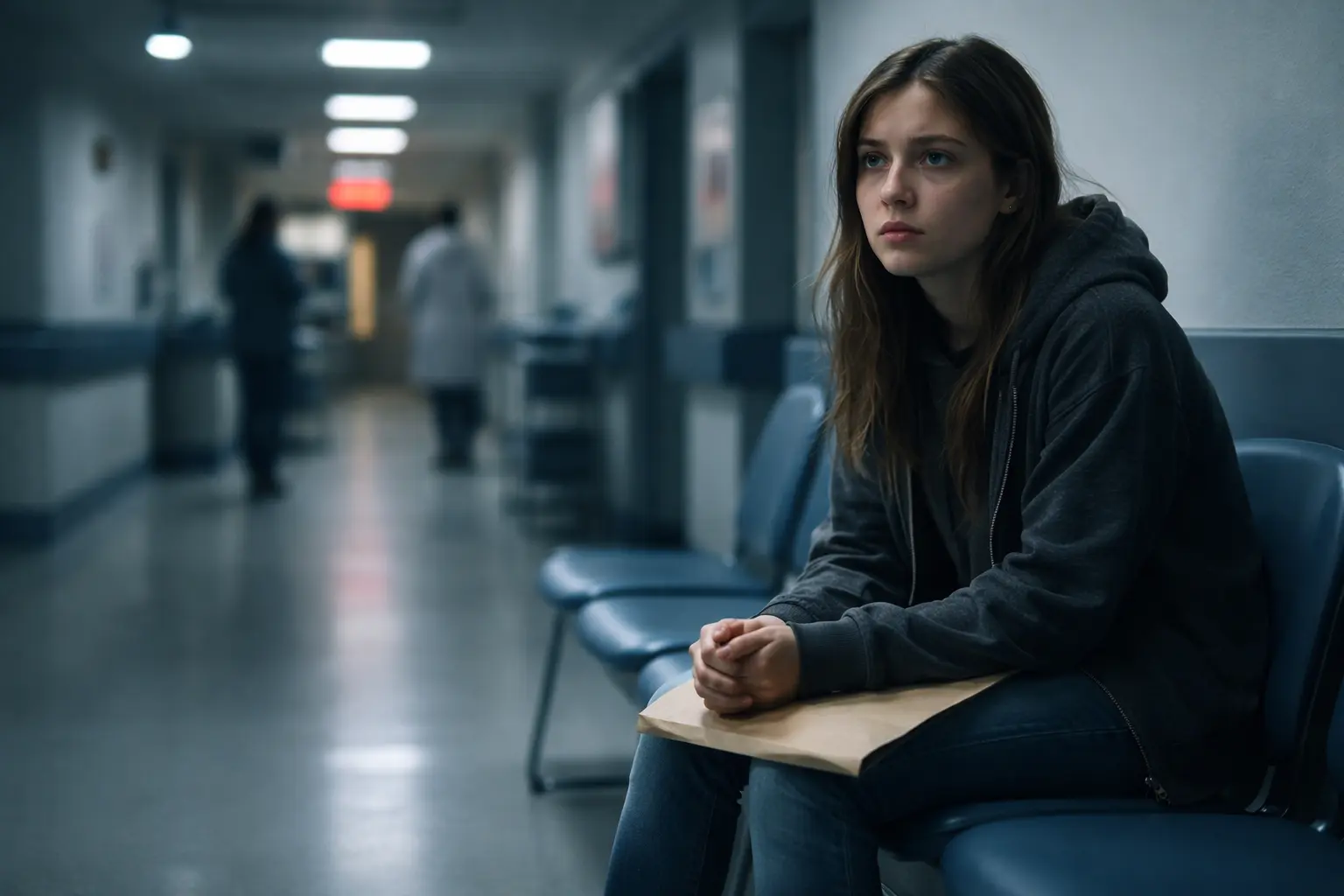
It is the story of a father who left Moldova with his 18-year-old daughter holding a brain cancer diagnosis — and came home with a birth control prescription.
Diagnostic errors exist. They can be devastating. And they can be avoided. Ana's story shows why a second opinion is not a luxury — but sometimes the only difference between a destroyed life and a normal one.
From the Money.ro editorial team | Interview conducted with an international medical facilitation consultant from tratamentestrainatate.ro
The phone rang on an ordinary afternoon.
It was a father. His voice was not sad — it was broken. The kind of voice you have when your brain refuses to process what you have just heard.
"My daughter has a brain tumor. She is 18 years old. What do I do?"
"She Simply Collapsed on the Floor"
Money.ro: How did it all begin?
Consultant: Ana — I call her Ana, that is not her real name — was a girl of 18-19 years old from a large city in Moldova. Healthy, active, with no worrying medical history.
One day she fainted. She simply collapsed on the floor. She felt extremely weak and could not stand up. The family rushed her to the emergency department of the local hospital.
At the emergency room, a decision was made to perform a cranial CT scan. A correct decision in the face of an unexplained fainting episode.
And then the answer came.
The doctor who read the CT images wrote in the medical letter what he saw — or what he believed he saw: an extensive tumor mass between the two cerebral hemispheres, at the level of the connecting bridge.
In other words: brain cancer.
Money.ro: How did the family react?
Consultant: The father took the medical letter, put it in the car together with his daughter and left immediately for Bucharest. He called me from the road.
He was in total panic — the kind of cold, controlled panic of a man who is trying to function even though everything inside him has collapsed. He spoke slowly, clearly, with economy of words. Action-oriented. "What do we do? Tell me what we do."
The CD with the Original Images
Money.ro: What did you do at that moment?
Consultant: The first thing I did was to prepare the available documentation and send it to a professor specializing in neurosurgery and neurology in Vienna — one of the most experienced in Austria in complex cerebral pathology.
You should know that when you have a cranial CT scan, you receive a CD with all the images taken and a letter with the interpretation of a doctor who reads those images. Ana's father had made sure to take everything.
I sent the information from the medical letter. The Viennese professor's response came quickly — and it was unexpected.
He told us not to travel by plane under any circumstances. To come urgently by car or train. And to bring the CD with the original images — not just the letter.
Money.ro: Why was the CD with the original images important?
Consultant: This is a technical detail that many patients don't know.
The medical letter contains the interpretation — meaning what the doctor saw and how he interpreted the images. The CD contains the raw images in DICOM format — hundreds or thousands of sections through the brain, with all the technical acquisition data.
A specialist can see completely different things in the original images compared to what the doctor described in the letter. Or he can see that the interpretation is wrong. Without the CD, you cannot do a real reevaluation — you are working with someone else's opinion, not with the raw data.
The Viennese professor wanted to see for himself. Not to read what someone else had seen.
"Do Not Board a Plane"
Money.ro: Why did he recommend not coming by plane?
Consultant: That is the question the father asked me immediately.
The professor's answer was cautious and responsible: if the diagnosis of a cerebral tumor mass were confirmed, the pressure in an airplane cabin can represent an additional risk in the presence of a cerebral lesion with mass effect. It was a precautionary measure — not a confirmation of the diagnosis.
The father understood immediately. He turned the car around — they had come to Bucharest specifically to take a plane to Vienna — and left directly by car.
I have never seen anyone reach Vienna faster than that father.
Money.ro: How was Ana during all of this?
Consultant: This is the part that impressed me most.
Ana was calm. Even smiling. Confident that everything would be fine. Her age, probably — at 18 the brain does not process mortality with the same weight as at 40 or 50. Or perhaps she simply had an extraordinary character.
The father was the one carrying all the weight. Tense to the maximum. Silent. Focused exclusively on the road and on what was to come.
The Morning in Vienna
Money.ro: What happened in Vienna?
Consultant: The professor received them immediately. He analyzed the CD with the original images — all sections, all technical data.
The next morning he called me.
He was happy. And relieved. That specific joy of a doctor who has good news to give.
He could not see anything on those images. Nothing seemed wrong to him. Not a trace of a tumor mass.
But — and this is the detail that says everything about what quality medicine means — he did not stop there. He repeated the testing with his own equipment and performed additional investigations, given the potential severity of the condition.
Nothing. Ana's brain was perfectly healthy.
Money.ro: How do you explain the discrepancy with the initial interpretation?
Consultant: It is not my role to judge the doctor who signed the initial letter. I do not know exactly what he saw, under what conditions he worked, what equipment he used, how much experience he has with this specific pathology or how many patients he had seen that day.
What I know is that errors in the interpretation of medical imaging exist everywhere in the world — not just in Romania. International studies show that the rate of discordance between initial interpretation and reevaluation by a dedicated specialist can be significant in complex cerebral pathology.
What makes the difference is rapid access to that reevaluation — before the family makes devastating decisions based on an uncertain diagnosis.
The Gynecology Professor
Money.ro: And yet — why had Ana fainted?
Consultant: The professor in Vienna, after completely excluding neurological pathology, recommended a consultation with a gynecology professor.
One of the most recognized gynecology professors in Vienna agreed immediately to see her.
The diagnosis was simple and completely benign: an episode of very powerful hormonal surge, related to her age, her menstrual cycle and the biological particularities of that moment. Acute hormonal imbalance can cause fainting, extreme weakness, inability to stand — exactly what Ana had experienced.
The solution: permanent contraceptive medication for hormonal stabilization.
Money.ro: How did the family react when they found out?
Consultant: From total shock and terror — to a joy that cannot be described in words.
The father called me. He did not say much. He was silent for a few seconds. Then he said "thank you" — and his voice said everything.
Ana left Vienna with a birth control prescription. She completely forgot about that CT interpretation. She continued her life normally.
What Ana's Story Teaches Us
Money.ro: What conclusion do you draw from this case?
Consultant: That diagnostic errors exist. That they are human. That they happen in the best medical systems in the world — not just in Romania.
And that the consequences of an uncorrected wrong diagnosis can be devastating — not medically, but humanly. A family that starts down a path of chemotherapy or neurosurgery based on an incorrect diagnosis loses something that can never be recovered — time, psychological health, sometimes money, sometimes relationships.
Ana's story ended well because her father acted immediately — he did not accept the diagnosis without verification. And because the reevaluation was rapid, carried out by an experienced specialist, on the original images, not on a secondary interpretation.
Money.ro: What advice do you give a patient or family who receive a serious and unexpected diagnosis?
Consultant: The same advice I have always given: before making any major therapeutic decision — surgery, chemotherapy, radiotherapy — seek a second opinion.
Not because your doctor would be wrong. But because medicine is complex, imaging has technical and interpretive limitations, and because you deserve the certainty that the diagnosis is correct before embarking on a difficult path.
In Ana's case, the second opinion cost no more than a car trip to Vienna and a few hours of investigations. And it changed everything.
Not all stories end with a birth control prescription. But all deserve verification.
Call us. We analyze the situation. We tell you honestly what and how. → ☎ 0754 225 262
Ana is a real patient whose identity has been anonymized. tratamentestrainatate.ro is an administrative and logistical facilitation company — it does not provide medical services and does not establish diagnoses or treatments.
Acest articol nu reprezintă consultanță financiară.
Newsletter zilnic money.ro
BET, curs valutar, știrea zilei — în 2 minute, înainte de 7:00.






![[P] Aleze absorbante pentru incontinență: cum alegi produsul potrivit pentru un confort real](/_next/image?url=https%3A%2F%2Fmoney-ro-cdn.sorin-freciu.workers.dev%2Fstorage%2Fv1%2Fobject%2Fpublic%2Fmedia%2Farticles%2F1787897449276-4kv5shig3ns.jpg&w=1920&q=75)