"He Sold His Inheritance to Save His Mother" - How a 30-Year-Old Son Refused to Give Up and Took Refractory Ovarian Cancer from Paris to Israel and Turkey | Episode 3 of 10
Diagnosis and Treatment Abroad: The Real Stories of Romanians
In the series "Diagnosis and Treatment Abroad: The Real Stories of Romanians," published on Money.ro in collaboration with tratamentestrainatate.ro, we present today the story of Andrei and his mother Elena - a case that shows what it means not to give up when all standard protocols have been exhausted and what access to top international medicine can do when answers have run out in Romania and Austria.
When classic chemotherapy, surgery and treatment in Romania and Austria failed, a son sold his inheritance and embarked on a Paris-Israel-Turkey journey. Elena's story shows what a refractory oncological case means and why sometimes the solution doesn't exist in standard protocols.
From the Money.ro editorial team | Interview conducted with an international medical facilitation consultant from tratamentestrainatate.ro
The voice that called was that of a young man. About 30 years old. He spoke slowly, carefully, as if each word cost him effort. "My mother has ovarian cancer. We went to Romania. We went to Austria. It's not responding. I don't know what else I can do." He paused. "I am not willing to give up."
"Dad Had Another Family for Years"
Money.ro: Who is Andrei and why did he end up calling you?
Consultant: Andrei worked from morning until evening on an animal farm together with his father. A family business, a legacy built over hard years. His parents had divorced many years earlier. His father had built a new life - new wife, young children, other responsibilities. Andrei had remained in the middle - working with his father, but his heart was with his mother.
Elena had been the pivot of his life after the divorce. The one who had absorbed everything - the pain, the uncertainty, the difficult years with a tough and emotionally distant father. She had been his shield. And now she was sick. Seriously.
Money.ro: What was Elena's medical situation when you met Andrei?
Consultant: Elena had received the diagnosis of ovarian cancer in Romania. She had been operated on - the surgeon had managed to remove what was possible at that time, but the tumor mass could not be completely removed. Classic chemotherapy had followed according to standard protocols. Tumor markers weren't responding. The remaining tumor mass wasn't responding to treatment.
The family had then gone to Austria, where Elena had received a complete reevaluation and had been recommended for another line of treatment. They followed it with hope. That one also hadn't produced the expected results. Andrei had called me after Austria. When all known protocol options had already been exhausted.
"He Sold His Inheritance"
Money.ro: How did Andrei manage to finance what followed?
Consultant: This is perhaps the hardest part to tell. Andrei asked his father to separate his share of the common business - the farm they had worked together for years. Practically his inheritance. And he sold it.
He didn't hesitate. He didn't calculate much. He said there is no sum of money worth more than his mother's chance to live. I have met many people in this work. Andrei's determination was of a different caliber.
Money.ro: What did you decide to do as a first step?
Consultant: The first step, before anything else, was to understand exactly where Elena stood medically - through the eyes of the best oncologists in the world specializing in refractory cases.
We decided that the first step is Institut Curie in Paris - one of the most prestigious oncological centers in the world, recognized in the Newsweek World's Best Hospitals 2026 ranking and a world reference center for complex and rare gynecological cancers.
Paris: A Commission of 10 Specialists
Money.ro: How does the evaluation process at Institut Curie work?
Consultant: The procedure at Institut Curie is rigorous and different from what we know in Romania or even in Austria. You don't send a file and receive an opinion from one doctor. You send the paraffin blocks from the original biopsy - for the center's own histopathological reevaluation. You send all MRIs and CT scans in DICOM format. You send the complete history of treatments performed, tumor markers in evolution, all medical documents.
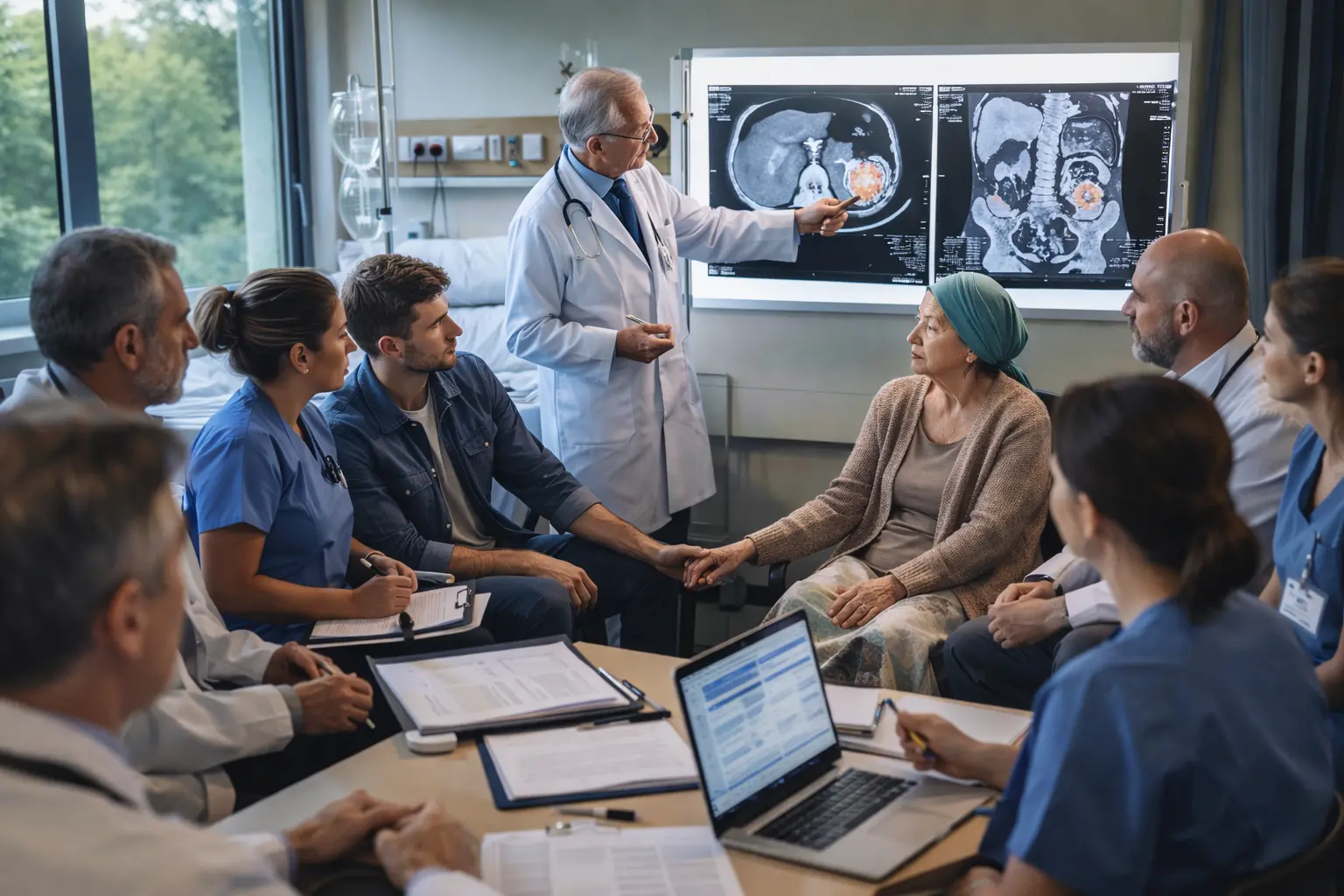
A commission of ten specialists analyzes the case. Medical oncologists, surgical oncologists, radiation therapist, imaging specialist, anatomopathologist. Each analyzes independently. And to issue a report, there must be unanimous agreement - all ten must agree with the conclusion.
This is multidisciplinary medicine at the highest level. Not one person's opinion. A system's opinion - exactly what we do when we coordinate an international MDT Tumor Board evaluation.
Money.ro: What did the Institut Curie commission conclude?
Consultant: The report was one of the most honest and clearest I have seen. The commission acknowledged that the lines of treatment from Romania and Austria had been correctly executed - according to the international oncological guidelines ESMO applicable to Elena's case. The doctors who had treated her had not made mistakes. The protocols had been respected.
But the conclusion was clear: for Elena's case, standard protocols no longer offered real chances of survival in the medium term. Something different was needed. Something newer. Something available only in centers working with molecules still in advanced clinical trial phases or recently approved outside Romania. I immediately thought of Israel.
Israel: The Professor Who Accepted an Impossible Case
Money.ro: How did you find the doctor in Israel?
Consultant: Through our collaboration network with doctors and international patient departments of Israeli hospitals. We specifically searched for a professor with documented experience in refractory ovarian cancers - cases where standard protocols had failed. We found him. We sent him the complete file. He agreed to evaluate the case.
But because we're talking about an extremely complex case - refractory to multiple lines of treatment - the professor asked that Elena come physically to Israel. Direct evaluation was mandatory before any therapeutic decision.
Money.ro: How did the meeting with the Israeli professor go?
Consultant: Andrei told me later how that consultation was.
The professor analyzed the entire file in front of them. He asked precise questions. He examined Elena directly. And at the end he spoke directly, without hiding anything.
He told them there was a therapeutic option he had in mind - a more aggressive combination, harder to tolerate, but which in his experience with similar cases was the only one that might work. A scheme that combined chemotherapy with biotherapy, immunotherapy and a component from an active clinical trial for which Elena was eligible based on her molecular profile - identified through a complete ADN and ARN molecular profiling.
He said clearly: it will be hard. The side effects will be significant. But if there is a chance, this is it. Andrei and Elena agreed immediately.
Money.ro: Why did Elena accept such an aggressive treatment?
Consultant: Because the alternative was to have no more time.
And because Andrei was there. Next to her. Just as she had been next to him through all the hard years. The first treatment cycle was performed in Israel, under the direct supervision of the professor. Elena tolerated the treatment - hard, but she tolerated it.
Turkey: Continuation Under Israeli Coordination
Money.ro: Why did the treatment continue in Turkey and not in Israel?
Consultant: This was a practical and financial decision, made together with the Israeli professor, who agreed and fully supported it.
The prescribed treatment scheme included medications that were not compensated in Romania and had to be purchased privately. Turkey offered the most advantageous formula for calculating the price per treatment cycle for this specific scheme - significantly more accessible than continuing in Israel or purchasing in Western Europe.
We chose an oncological clinic in Turkey with JCI — Joint Commission International standard - international accreditation equivalent to that of major European centers. We coordinated the complete file transfer, the treatment protocol signed by the Israeli professor and the direct communication between the Turkish team and the Israeli coordinating doctor.
The Israeli professor monitored every cycle. He adjusted the scheme when necessary. He remained the coordinating doctor of the case, regardless of where the treatment was physically taking place. This is hybrid case management - a formula we frequently facilitate at tratamentestrainatate.ro that combines the expertise of a top center with the logistics of a more financially accessible center.
The Remission That Came When She Had Almost Given Up
Money.ro: How did Elena evolve?
Consultant: After the first treatment cycles in Turkey, came the evaluation. I remember exactly the moment when Andrei called me. His voice was completely different from the first call.
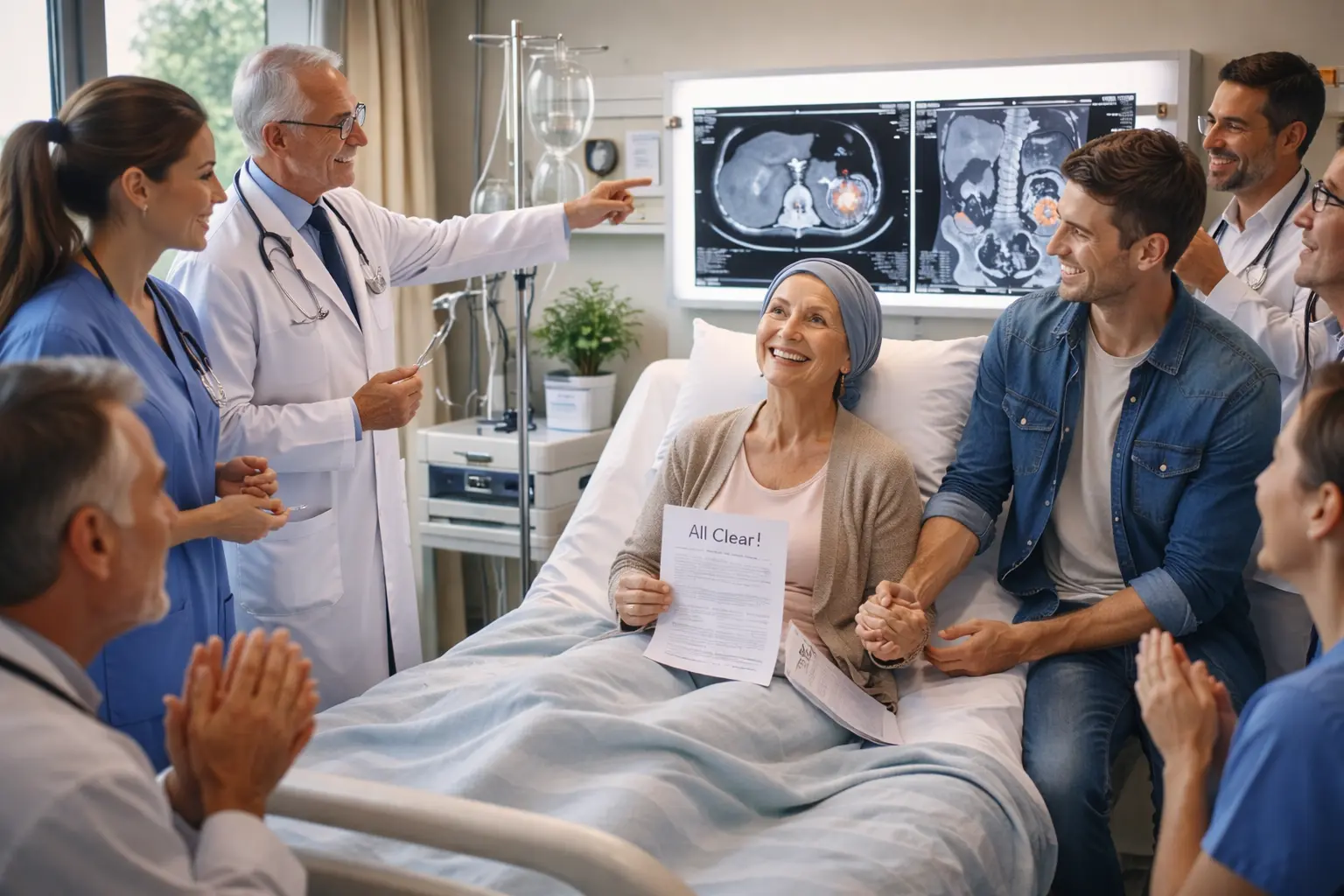
The tumor mass had regressed. Tumor markers had improved significantly. Elena felt well - given the conditions of advanced oncological treatment, quality of life was good. It was a remission. Partial, but real. Documented imagistically and biologically.
Money.ro: How did Elena experience this news?
Consultant: Andrei told me his mother had almost given up. Not on life - but on the fight. She had seen so many treatments failing, so many doctors saying there were no more options. Oncological fatigue is real and devastating.
What had never given up was Andrei. He had pushed everything forward - logistics, finances, documents, appointments, communication with doctors. He had been the engine. And when the remission came, Elena told him: "If I gained time, you are the reason."
Money.ro: What is the realistic objective in cases of advanced refractory ovarian cancer?
Consultant: We must be honest about what success means in advanced stage oncology. The goal is not always complete cure. Sometimes - and frequently in refractory cases - the goal is remission, disease control, prolonging life in conditions of good quality.
According to data published by American Cancer Society, survival in advanced stage ovarian cancer is significantly improved by access to second and third line therapies with new molecules. The difference between a center that has access to these molecules and one that doesn't can be measured in months or years of life.
Elena gained time. Quality time. And that, in advanced oncological medicine, is a real victory.
What It Means Not to Give Up
Money.ro: What did you learn from Andrei and Elena's case?
Consultant: That in advanced oncology, access to the right medical network can fundamentally change the trajectory of a case. Institut Curie gave the direction. The Israeli professor gave the solution. The Turkish clinic gave the accessibility. And Andrei gave the will without which none of this would have happened.
Not all patients have an Andrei. This is the reason tratamentestrainatate.ro exists - to be that system of coordination and perseverance when the family doesn't know where to start or when exhaustion has worn everyone down.
Money.ro: What advice do you give a family that is in Andrei's situation today?
Consultant: Don't accept that there are no more options before consulting a center that effectively works with refractory cases.
Romania does what it can with available resources. Austria and Western Europe follow excellent protocols. But in cases where standard protocols no longer work, there is another medical world - in Israel, in the USA, in centers actively participating in clinical trials with new molecules.
An international second opinion costs less than most people think. And it can be the difference between knowing there is nothing more to be done and discovering that there is.
Call us ☎ 0754 225 262. We analyze the file. We honestly tell you what options exist and whether it's worth continuing the search.
What is tratamentestrainatate.ro
tratamentestrainatate.ro is a Romanian company facilitating access to international medical services. It connects Romanian patients with centers recognized in the Newsweek World's Best Hospitals 2026 ranking from Israel, Austria, Turkey, France and the USA - for oncological second opinion, international Tumor Board coordination, NGS molecular testing and complete medical case management.
Information about medical facilitation services and about ovarian cancer treated abroad is available on the website.
Andrei and Elena are real patients whose identities have been anonymized. tratamentestrainatate.ro is an administrative and logistical facilitation company - it does not provide medical services and does not establish diagnoses or treatments.
Acest articol nu reprezintă consultanță financiară.
Newsletter zilnic money.ro
BET, curs valutar, știrea zilei — în 2 minute, înainte de 7:00.






![[P] Aleze absorbante pentru incontinență: cum alegi produsul potrivit pentru un confort real](/_next/image?url=https%3A%2F%2Fmoney-ro-cdn.sorin-freciu.workers.dev%2Fstorage%2Fv1%2Fobject%2Fpublic%2Fmedia%2Farticles%2F1787897449276-4kv5shig3ns.jpg&w=1920&q=75)