"My child was having seizures and doctors said it was nothing" - how a 3-year-old boy from Bucharest reached AKH Vienna in just a few hours | Episode 2 of 10
Diagnosis and Treatment Abroad: Real Stories of Romanian Patients
By the Money.ro editorial team | Interview conducted with an international medical facilitation consultant from tratamentestrainatate.ro
Alexandru's story shows that an emergency appointment at one of Europe's largest university hospitals does not take weeks — it takes hours. And that the difference between "let's wait and see" and "bring him immediately" can be the difference between life and death.
Andrei hadn't slept for three nights. He sat on a chair next to his 3-year-old son's hospital bed and counted. He counted how many episodes occurred per hour. How many seconds each lasted. How intense the shaking was. How often it happened.
Alexandru had been admitted a few days earlier with a kidney infection — at least, that's what they had been told. But over the past day, something had changed dramatically. The boy began having repeated episodes in which his body shook violently, his eyes rolled back, and he became unresponsive. Many episodes. Frequent. One after another.
And that morning, Andrei noticed something that froze his heart: half of Alexandru's face was no longer moving normally. Neither was half of his body. "I told the doctors," Andrei recalls. "They told me it was nothing to worry about. That he would recover." Andrei knew that wasn't true. A father knows.
"Bring him immediately. His life is in danger."
Money.ro: How would you describe the situation when the child's father called you?
Consultant: It was a real medical emergency. From the description — repeated seizures, partial facial and body paralysis occurring in the context of a severe infection — it was clear this went far beyond a simple kidney infection. The infection had spread and was affecting the central nervous system. It was both a neurological and nephrological emergency in a 3-year-old child. There was no time for waiting lists or bureaucracy.
Money.ro: What did you do in the first minutes?
Consultant: We immediately contacted the heads of the Pediatric Nephrology Department at AKH Vienna — Allgemeines Krankenhaus der Stadt Wien, the largest university hospital in Central Europe. We described the case. Their response was unequivocal: "Bring him as soon as possible. The infection is likely widespread, and his life is in danger." The appointment at AKH Vienna took a few hours. Not weeks. Not days. Hours.
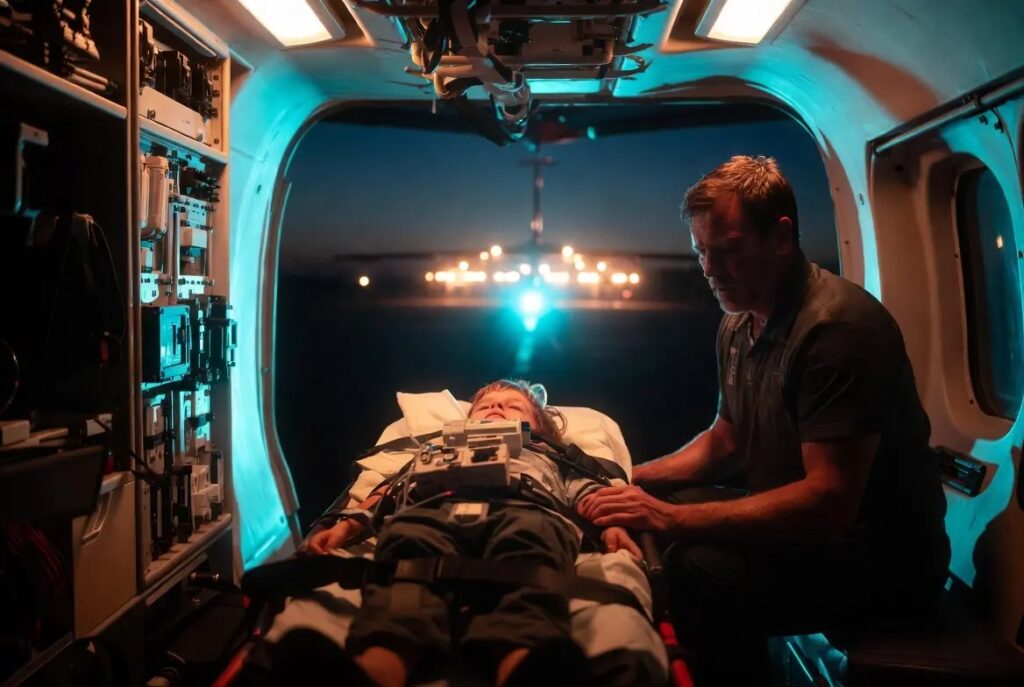
A medical aircraft from Switzerland, a medical team, and a 3-year-old boy
Money.ro: How did you organize the transfer?
Consultant: At the same time as securing confirmation from AKH Vienna, we arranged medical air transport. We contacted a specialized air ambulance operator — the medical team arrived from Switzerland, with a fully equipped aircraft for pediatric emergency transport. Meanwhile, together with the hospital in Romania, we prepared the complete medical documentation — including the "fit to fly" assessment, essential for transporting an unstable patient by air. Every document had to be perfect. There was no margin for error.
The aircraft picked up the family from Băneasa Airport. Alexandru, Andrei, and his mother flew to Vienna. The full medical file had already been transmitted digitally to AKH Vienna.
Money.ro: How long did the entire logistics process take — from the first call to takeoff?
Consultant: A few hours. That's all. Appointment at AKH Vienna, aircraft organization, documentation, coordination with the Romanian hospital — everything within hours. That's the difference we make. We don't organize medical tourism. We organize emergencies. We provide case management.
In Vienna: from ambulance to diagnosis
Money.ro: What happened after landing?
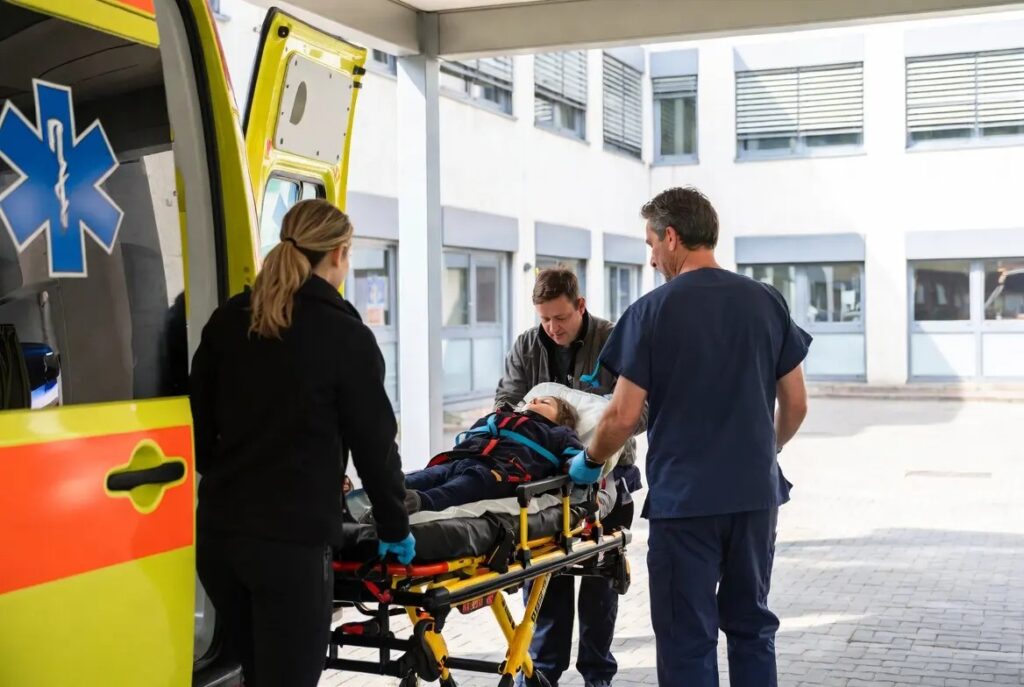
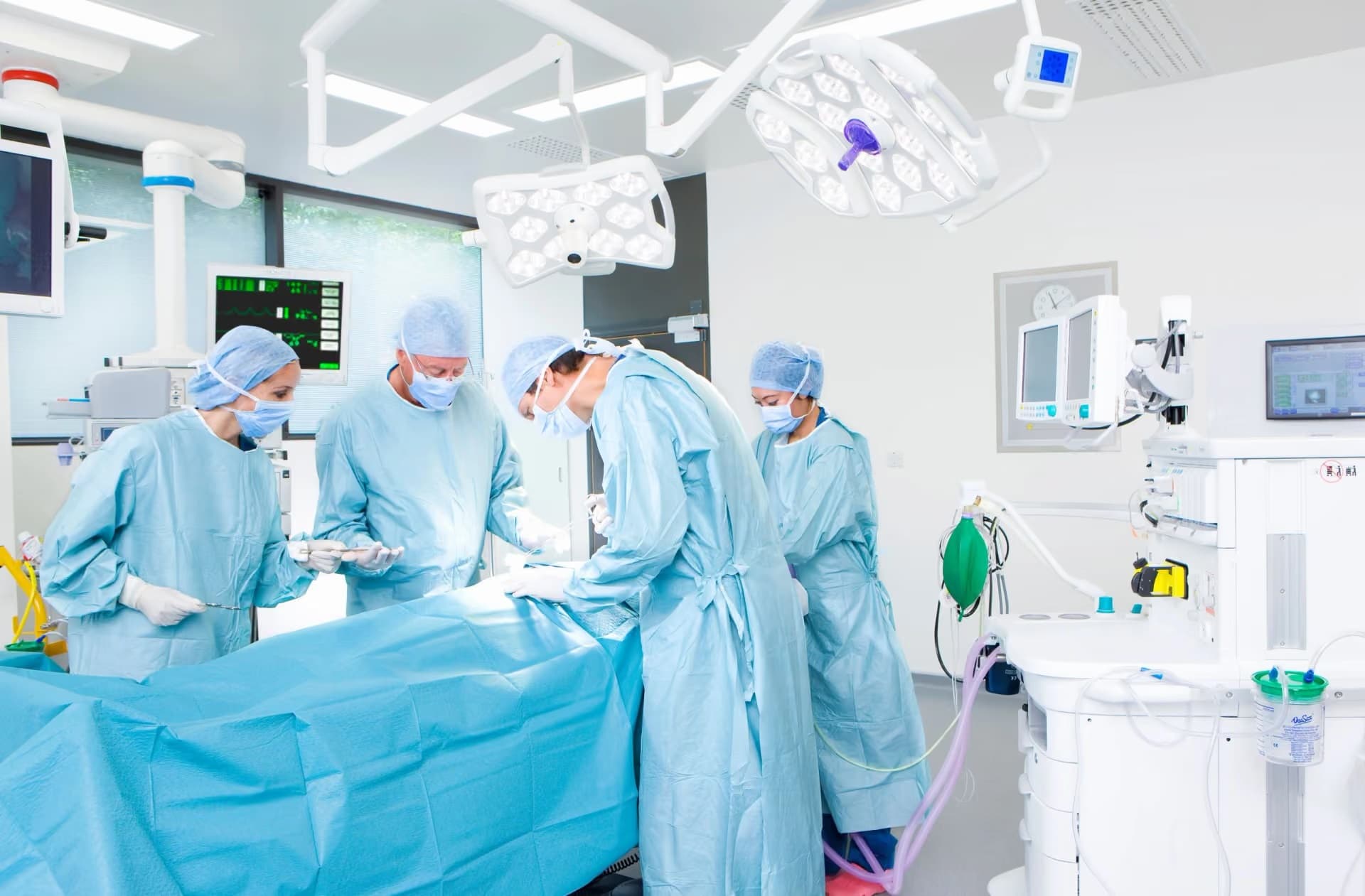
Consultant: In Vienna, a ground ambulance was waiting directly on the runway and transported them to AKH Vienna. The pediatric nephrology team was ready. Investigations began immediately to establish the final diagnosis: emergency brain MRI, full neurological testing, complex lab work. A multidisciplinary team — pediatric nephrologists, neurologists, infectious disease specialists — analyzed the case simultaneously.
The seizures stopped after the correct treatment was initiated. The final diagnosis confirmed the concern: the kidney infection had spread severely, affecting the central nervous system. The partial paralysis Alexandru presented was a direct consequence of this uncontrolled progression.
Money.ro: How long was Alexandru hospitalized?
Consultant: Approximately three months. It was not a short stay — it was a complex, intensive treatment coordinated by one of Europe's top pediatric nephrology teams. It was followed by a period of physical and motor rehabilitation, also under the supervision of the Vienna department.
Three months in Vienna. Then recovery. Then normal life.
Money.ro: Where is Alexandru today?
Consultant: Alexandru is in perfect physical condition. The partial paralysis he had in the early days — a direct consequence of lost time when no one acted — has completely disappeared after intensive rehabilitation. He is monitored every 6–12 months by the team at AKH Vienna. At every evaluation, everything is normal. He is now a few years older. He runs. He plays. He lives.
Money.ro: What if Andrei hadn't called?
Consultant: I won't speculate. What I do know is that severe infections affecting the central nervous system in young children evolve rapidly and unpredictably. Every hour matters. Every decision matters. Andrei made the right decision. And he made it quickly.
"How long does it take to get an emergency appointment at AKH Vienna or Sheba Israel?"
Money.ro: This is one of the most common questions you receive. What is the real answer?
Consultant: The real answer — and I understand many people don't believe it at first — is that an emergency appointment with specialized doctors at AKH Vienna, Sheba Medical Center Israel, Memorial Istanbul, or Mayo Clinic USA takes hours in most cases, not weeks. Exceptions occur when the specific doctors are unavailable, for example due to conferences.
There is a fundamental difference between contacting an international hospital yourself via a website form — where you may wait days or weeks — and contacting through tratamentestrainatate.ro, where we aim to build direct relationships with doctors, department heads, and international patient departments. When we say emergency, we mean emergency.
Money.ro: What does "a few hours" actually mean in practice?
Consultant: It means that on the same day you contact us, we can obtain confirmation from an international center that they will take over the case. At the same time, we organize logistics — medical air transport if necessary, documentation, coordination with the Romanian hospital. Alexandru's case is an extreme example — medical aircraft, Swiss team, same-day international transfer. But the principle is the same: speed of response can make the difference.
Money.ro: And for non-urgent cases — second opinions, oncology evaluations?
Consultant: For non-urgent cases — oncology second opinions, tumor board evaluations, molecular profiling — scheduling usually takes 2–5 business days for center confirmation and 5–14 days for the actual specialist board review. The idea that you must wait months to reach a top doctor in Vienna or Israel is a myth. It doesn't work that way when there is dedicated access facilitation.
What does full case management mean and what does tratamentestrainatate.ro facilitate in emergencies?
Money.ro: What concrete steps do you take in the first hours of an emergency?
Consultant: Simultaneously and rapidly:
✓ Direct contact with doctors and/or department heads at the appropriate international center
✓ Digital transmission of existing medical documents for initial evaluation
✓ Coordination with the Romanian hospital for transfer documentation — including "fit to fly" if required
✓ Organization of transport — ground or air ambulance, depending on the patient's condition
✓ Preparation of reception at destination — ambulance, medical team, prepared room
✓ Real-time translation and communication — for both the family and the medical teams in both countries
Money.ro: Does it work the same for Israel, Turkey, or the USA?
Consultant: Yes — and just as fast in most cases. Sheba Medical Center and Ichilov in Israel have dedicated international patient departments we work with directly. The same applies to Anadolu and Memorial in Turkey, Mayo Clinic and MD Anderson in the USA. Emergencies have no timezone.
What advice would you give to a parent or family in Andrei's situation today?
Money.ro: A child, an uncertain diagnosis, doctors saying "wait and see." What should they do?
Consultant: Call. Immediately. Don't waste time searching online, filling out forms on hospital websites, or waiting for email responses. Call 0754 225 262 — available 24/7. Describe the situation. We quickly and free of charge assess whether and where the patient can be helped.
A father watching his child have seizures and being told "it's nothing" should not accept that as the final answer. There is always a second opinion. There are medical centers that can treat what local hospitals cannot. Alexandru's case is not unique. We encounter it in different forms, at different ages.
What is tratamentestrainatate.ro
tratamentestrainatate.ro is a Romanian company facilitating access to international medical services. It connects Romanian patients and families with centers ranked in Newsweek World's Best Hospitals 2026 in Israel, Austria, Turkey, Germany, and the USA — for medical emergencies, oncology second opinions, international tumor board coordination, molecular profiling, and full treatment organization.
More information about medical facilitation services and conditions treated abroad is available on the website.
Alexandru is a real patient whose case has been anonymized. The father's name has been changed to protect the family's identity. tratamentestrainatate.ro is an administrative and logistical facilitation company — it does not provide medical services and does not establish diagnoses or treatments.
Acest articol nu reprezintă consultanță financiară.
Newsletter zilnic money.ro
BET, curs valutar, știrea zilei — în 2 minute, înainte de 7:00.





![[P] Aleze absorbante pentru incontinență: cum alegi produsul potrivit pentru un confort real](/_next/image?url=https%3A%2F%2Fmoney-ro-cdn.sorin-freciu.workers.dev%2Fstorage%2Fv1%2Fobject%2Fpublic%2Fmedia%2Farticles%2F1787897449276-4kv5shig3ns.jpg&w=1920&q=75)